From donation to impact
From every food and financial contribution to sorting, storage, repackaging, and distribution, see how your support helps us get food to people and communities
Food comes in from our community
1: Food & Community Donors
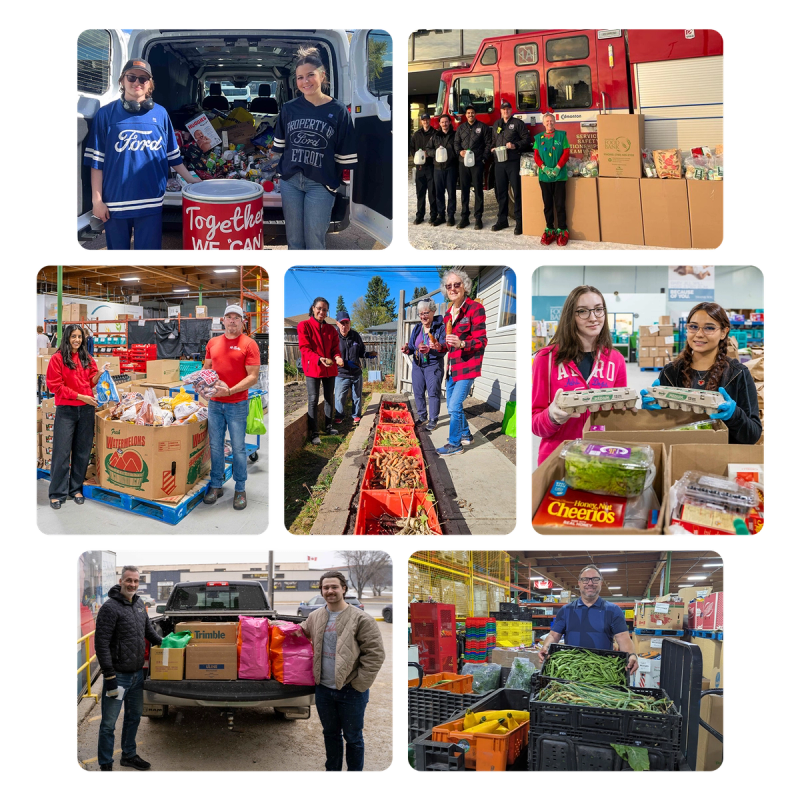
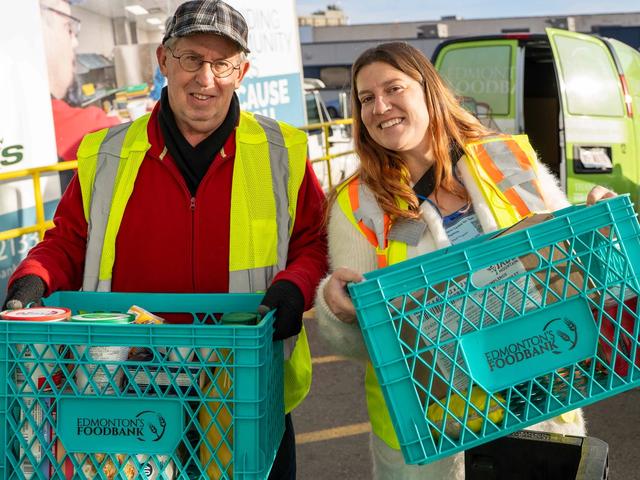
Food comes in from across our community. Individuals, local businesses, farms, and food partners donate non-perishable and approved fresh food through designated grocery store bins, fire stations, community events, and our main warehouse. These contributions help keep food moving through our network and toward the people and communities who need it most.
Edmonton’s Food Bank collected, sorted and redistributed more than 5.1 million kg of food valued at over $41.2 million.
Helps us cover operational cost
2: Monetary Donations
Monetary donations are our top priority. Donations are made online or by cheque, helping to cover operating costs and purchase the food the community needs most.
Bringing it all together
3: Sorting
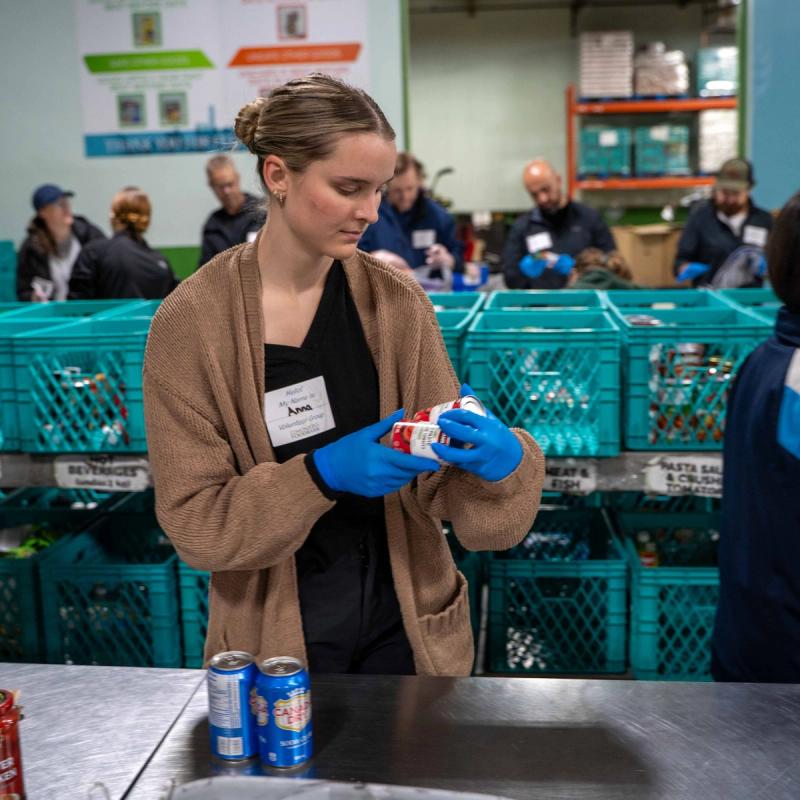
Sorting is a key part of our operation. Once we receive food, our dedicated volunteers and staff carefully sort, inspect, and organize donations to ensure the food is safe, appropriate, and ready to reach the people and communities who need it.
This essential work takes time, care, and thousands of volunteer hours. In 2025, our volunteers contributed 159,060 hours to help keep food moving through our operation and into the community.
Helping us provide greater choice
4: Food Purchase
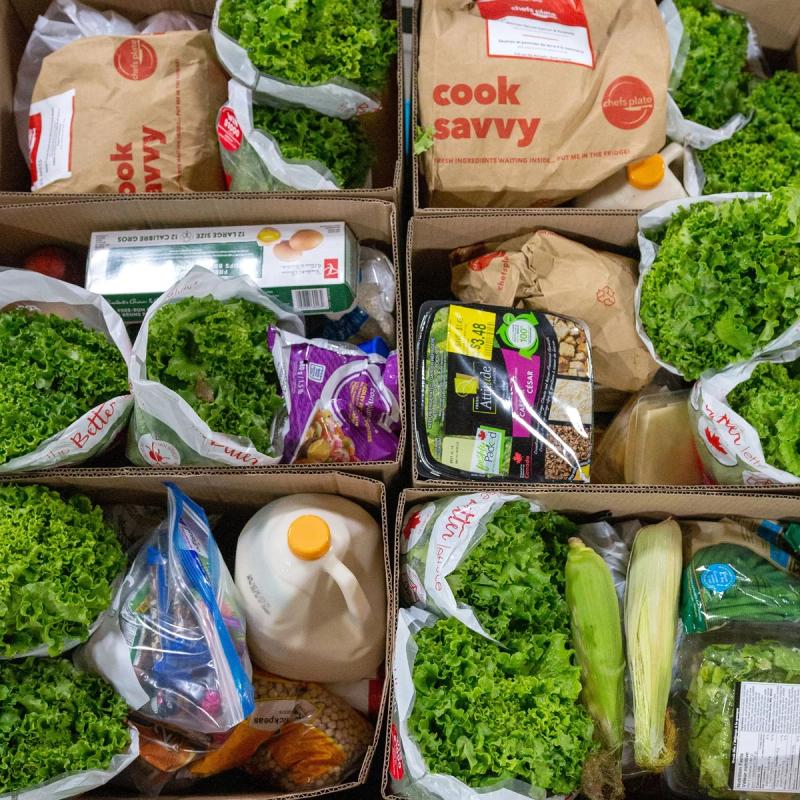
Monetary donations allow us to purchase food where it is needed most, helping us respond to community needs and provide a reliable supply of nutritious food throughout the year. By purchasing food directly, we can fill gaps in donated inventory and make sure essential items are available when they are needed.
In 2025, we purchased $3.96 million worth of food, helping us provide greater choice, consistency, and access to food for people and communities across our city.
Heart of food distribution
5: Storage & Retail Partners
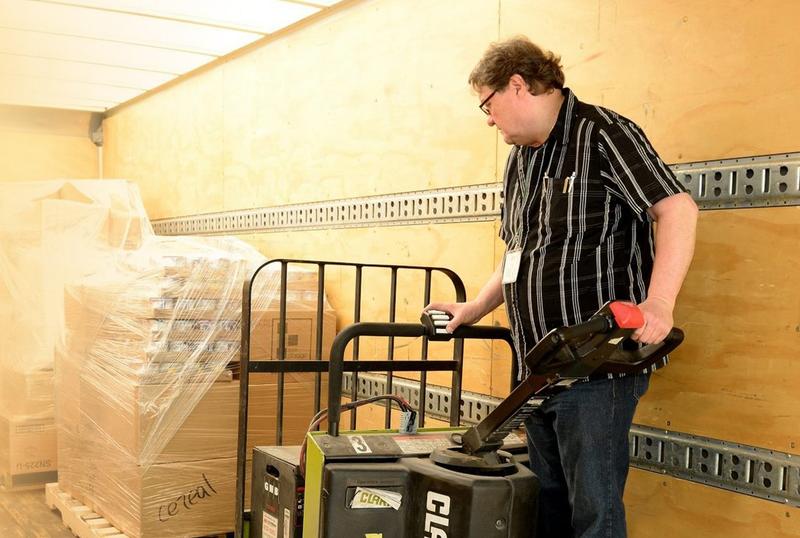
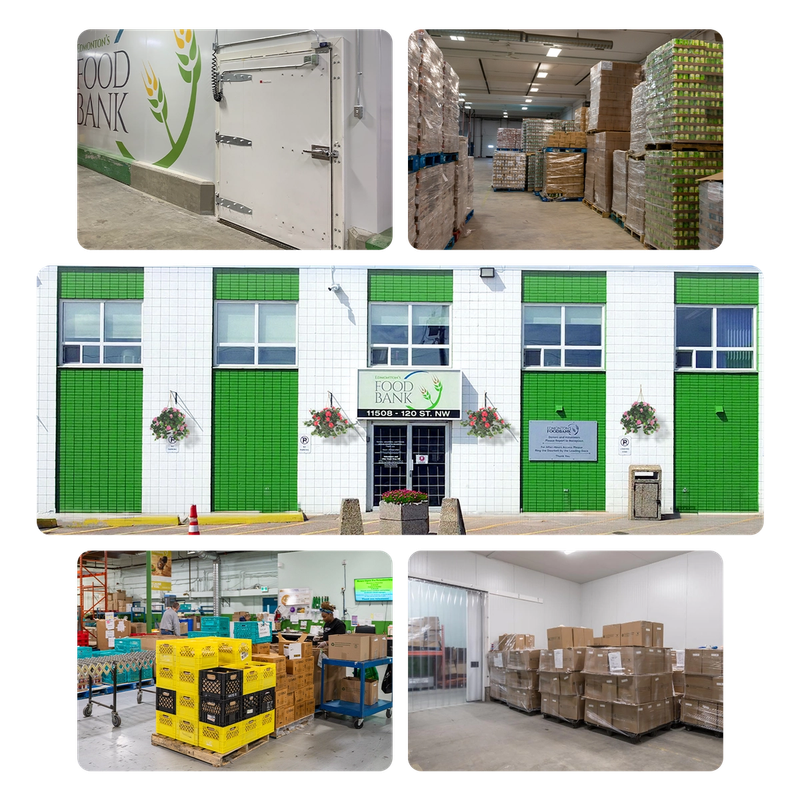
Since 2024, our main warehouse has been the heart of food distribution and includes sorting, repackaging, hamper making, and our agency’s sharing system.
Once donated and purchased food has been carefully sorted and inspected, safe and acceptable food is organized and stored in our warehouse. Industrial coolers and freezers allow us to safely store perishable and frozen items, while dedicated storage areas help us keep food organized and ready for distribution.
6. Repackaging & Preparation
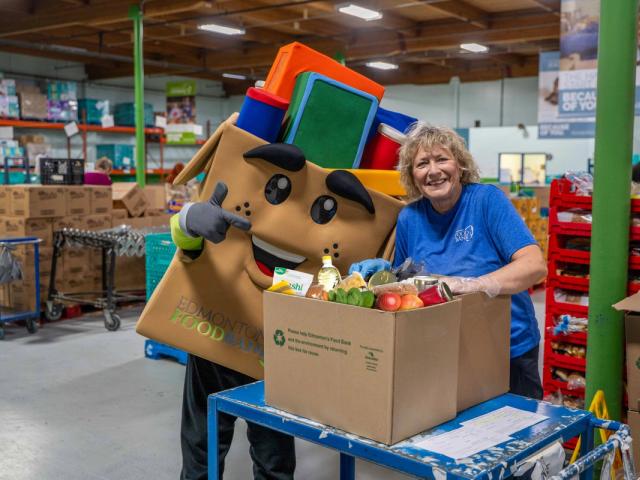
Sorted food is repackaged into food hampers or prepared for bulk orders that our community partners can distribute.
7. Distribution to Community Partners
We act as a central warehouse and distributor for more than 380 partner agencies across the city. Our network includes organizations such as soup kitchens, shelters, schools, food depots, and community organizations. Together, these partners help get food to people and families throughout our community.
8. Direct Client Hampers
Hampers are prepared and provided directly to individuals and families experiencing food insecurity. Over 40,000 people receive a food hamper in an average month, with ~38% of which being children. Our 72 depots spread city-wide aim to improve accessibility and reduce barriers to those facing food insecurity.